Employee productivity focuses on how effectively employees convert time, effort, and resources into useful work. It improves business value through better quality, faster completion, reduced waste, and stronger alignment with organisational goals.
Work conditions shape that output every day. The work environment, employee motivation, communication quality, workload balance, technology, and skill development influence focus, consistency, speed, and accuracy. Low morale reduces output over time. Inefficient processes, weak communication, and daily distractions slow execution, increase errors, and weaken consistency.
Clear support improves results. This support helps teams work faster, maintain quality, and track progress more accurately through better goals, smoother workflows, useful tools, and practical measurement. Role-based standards, KPIs, output, completion time, quality checks, benchmarks, and action planning then turn daily performance into measurable improvement.
What Is Employee Productivity?
Employee productivity is the level of useful work completed within a specific period using time, effort, and resources. It includes assigned tasks and role responsibilities that produce measurable output such as quantity, quality, and completion time. These elements show how effectively work converts into results.
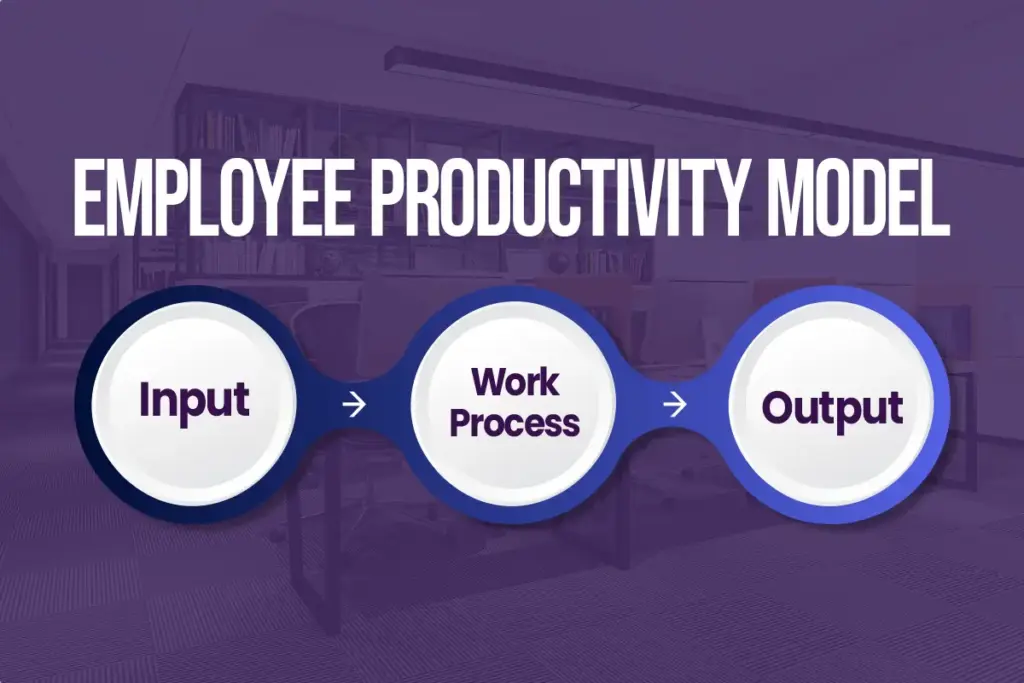
Results depend on input such as time, effort, and resources. This relationship defines efficiency, where higher output with controlled input indicates stronger performance. Performance also aligns with organizational goals and creates business value. Productivity varies by role, with sales roles tracking revenue and knowledge roles focusing on quality and outcomes. It represents the balance between input and output within a defined work period.
Why Is Employee Productivity Important?
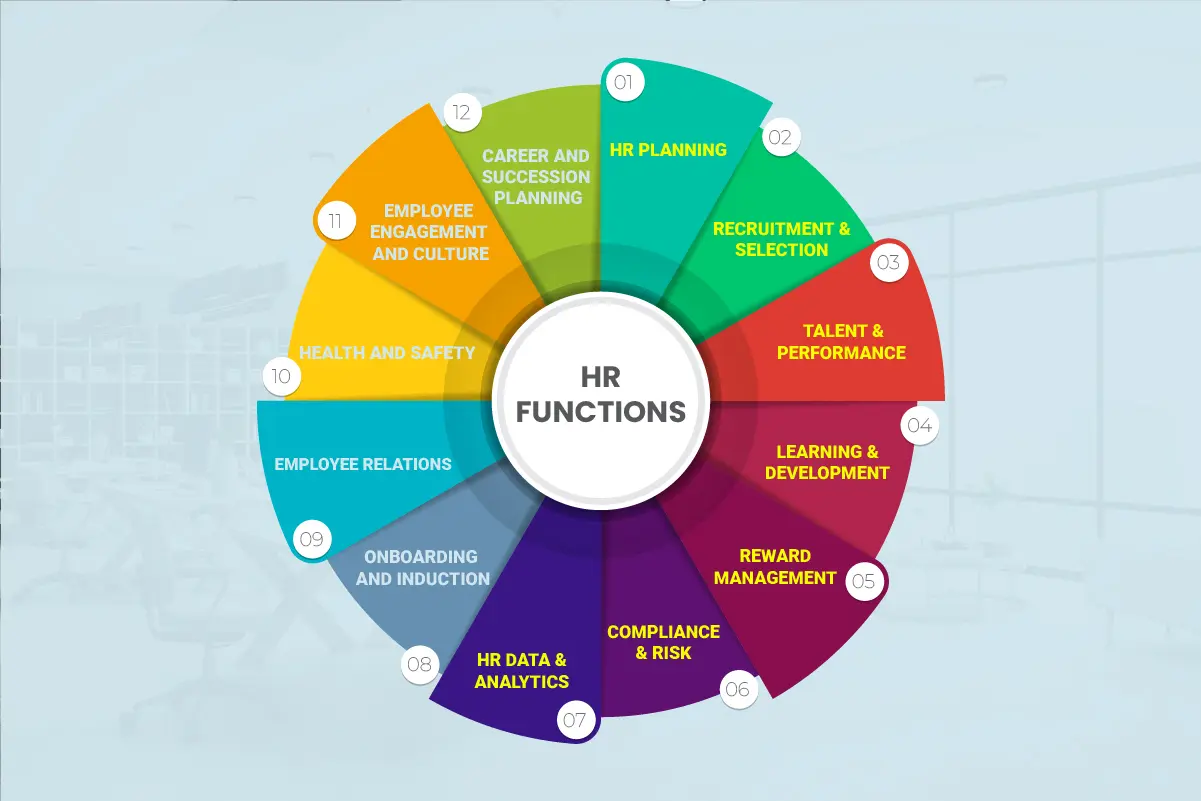
Employee productivity is important because it directly drives business performance, profitability, and long-term growth. It increases output without increasing resources. This efficiency reduces operational costs and improves return on investment. Many HR functions directly support productivity through workforce planning, performance management, and employee development.
Improved efficiency helps teams achieve goals faster while maintaining consistent quality. These results influence revenue, customer satisfaction, and service performance. Strong outcomes improve competitive position and support sustainable growth.
Productivity also affects employee experience. Better performance increases job satisfaction and retention, which reduces turnover and stabilizes workforce performance. Productivity connects daily work output with business success, operational efficiency, and long-term value.
What Factors Influence Employee Productivity?
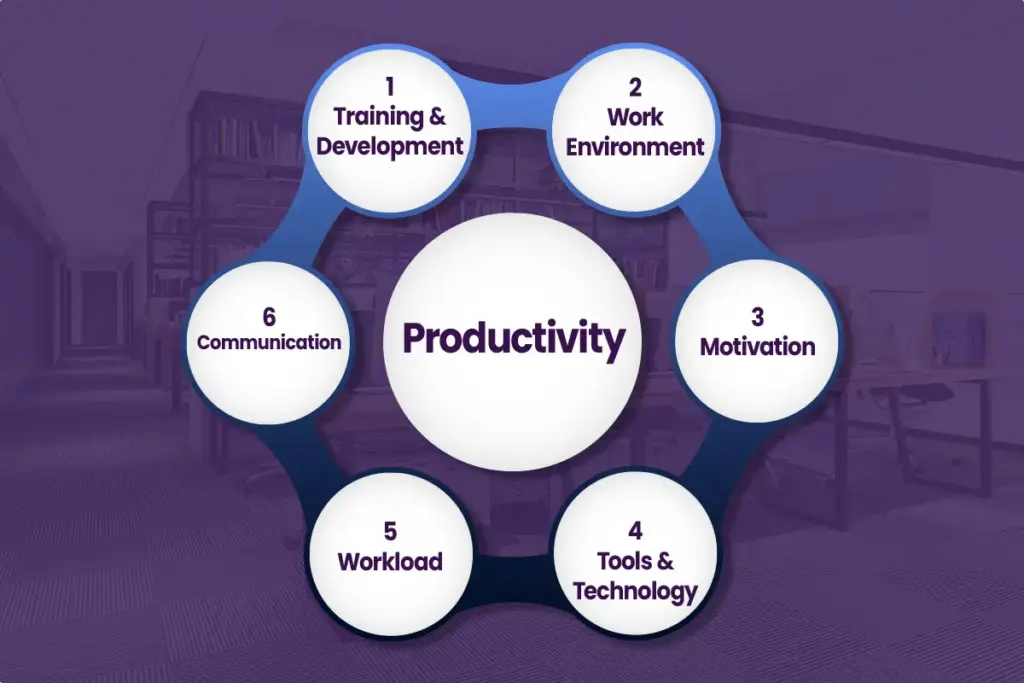
Employee productivity depends on the conditions that shape daily work. The main factors include work environment, motivation, tools, workload, communication, and skill development.
These factors influence output quality, completion time, and work consistency. Strong support improves focus, clarity, and efficiency, while weak support increases errors, delays, and friction.
Management quality also affects performance. It supports better results through clear direction, fair expectations, and access to the right resources.
How Does the Workplace Environment Affect Employee Productivity?
The workplace environment affects productivity through comfort, safety, flexibility, and stress levels. A well-structured setting supports focus, steady output, and better work quality.
Physical space influences concentration. Remote work policies, hybrid work routines, noise levels, and workspace design shape daily efficiency. Company culture also matters because micromanagement, excessive work hours, and poor work-life balance increase burnout and reduce consistency.
A productive environment removes friction from daily work. Better conditions improve wellbeing, lower stress, and support stronger performance over time.
How Does Employee Motivation Impact Productivity?
Employee motivation impacts productivity by shaping effort, focus, and work ownership. It increases engagement, improves consistency, and supports better results.
Motivation increases when employees receive recognition, fair compensation, growth opportunities, and meaningful work. These drivers increase job satisfaction and give employees a stronger sense of purpose. Strong purpose supports extra effort, while weak motivation reduces attention and lowers output quality.
Motivation also influences morale. Better morale improves commitment, reduces disengagement, and helps employees maintain performance across repeated tasks and long-term goals.
How Do Technology and Tools Improve Employee Productivity?
Technology and tools improve productivity by increasing speed, accuracy, and process efficiency. Better systems reduce manual work and help employees complete tasks with less friction.
Workflow tools support planning, coordination, and task tracking. Automation handles repetitive steps, while digital collaboration tools improve communication across teams. AI-powered workflows, chatbots, virtual assistants, scheduling tools, and project management platforms also reduce delays and improve usability.
Access matters as much as capability. Outdated tools slow work, create errors, and limit output, while accessible systems support smoother execution and stronger results.
How Do Workload and Time Management Affect Productivity?
Workload and time management affect productivity by controlling pace, focus, and task completion speed. Balanced workloads support steady performance, while poor distribution creates delays and errors.
Effective time management improves planning and helps employees allocate effort across priorities. It also reduces process friction through clear schedules, better task assignment, and fewer bottlenecks.
How Does Employee Communication Influence Productivity?
Employee communication influences productivity through clarity, direction, and feedback quality. It reduces misunderstandings and helps teams complete work with better alignment.
Managers shape this process by setting expectations and sharing useful feedback. Teams also rely on accessible communication channels, peer feedback, and timely updates to coordinate tasks. Their strong collaboration improves teamwork, while weak communication creates confusion and slows execution.
Clear communication also affects trust. Better listening and honest feedback strengthen alignment, improve accountability, and support more consistent performance.
How Does Training and Development Boost Employee Productivity?
Training and development boost productivity by improving competence, confidence, and adaptability. These skills help employees complete tasks with higher accuracy and less rework.
Learning programs, coaching, mentoring, and development plans strengthen role understanding. This support increases proficiency and helps employees respond faster to changing demands. Manager coaching also improves execution by correcting gaps before they reduce output quality.
Development supports long-term performance. Strong expertise improves daily efficiency, while continuous learning helps employees maintain value as tools, processes, and responsibilities change.
What Challenges Reduce Employee Productivity?
Employee productivity reduces when work includes friction, delay, and avoidable stress. Common challenges include workplace distractions, inefficient processes, low morale, poor communication, burnout, outdated systems, and unclear expectations.
These challenges reduce focus and slow execution. They also increase error risk, weaken consistency, and make work quality harder to maintain. Poor management adds more pressure through unclear direction, role confusion, and communication gaps. This pressure makes tasks harder to complete with speed and accuracy.
How Do Workplace Distractions Affect Employee Productivity?
Workplace distractions affect employee productivity by breaking focus and interrupting task continuity. It forces employees to switch attention, which slows completion time and increases mistakes.
This disruption comes from meetings, notifications, noise, and multitasking. These distractions reduce concentration and make deep work harder to maintain. Lower concentration leads to slower progress, weaker consistency, and more rework.
How Do Operational Inefficiencies Reduce Productivity?
Operational inefficiencies reduce productivity by slowing workflows and creating avoidable friction. Slow systems, manual tasks, redundant processes, and unclear procedures delay execution.
These delays reduce process speed, work accuracy, and output consistency. Workflow bottlenecks increase waiting time between tasks. These bottlenecks appear in approvals, task routing, and data collection. Poor workflow design adds extra steps, delays, and repeated work. Better workflow design removes these problems and helps employees complete tasks faster with fewer errors.
How Does a Decline in Morale Impact Employee Productivity?
A decline in morale impacts productivity by lowering engagement, effort, and work ownership. Low morale weakens motivation and makes consistent performance harder to maintain. This decline grows when employees lack recognition, trust, purpose, and job satisfaction. Weak employee experience reduces commitment and lowers willingness to give extra effort. Lower commitment affects output quality and team stability, while better morale supports stronger focus and more reliable results.
How to Improve Employee Productivity?
Employee productivity improves when work becomes clearer, faster, and easier to complete. The most effective improvements include clear goals, better communication, smoother workflows, useful tools, stronger support, and fair recognition.
Clear goals improve focus and reduce wasted effort. Managers support this process by setting priorities, defining expectations, and giving timely feedback. This structure helps employees work with more confidence, ownership, and consistency.
Better workflows improve speed and quality. Streamlined processes reduce bottlenecks, while automation removes repetitive tasks. Better tools also help employees complete work with fewer delays and fewer errors.
Workplace support improves long-term performance. Training builds skill, wellbeing protects energy, and recognition increases engagement. Trust also matters because supported employees adapt faster and produce stronger results.
How to Measure Employee Productivity
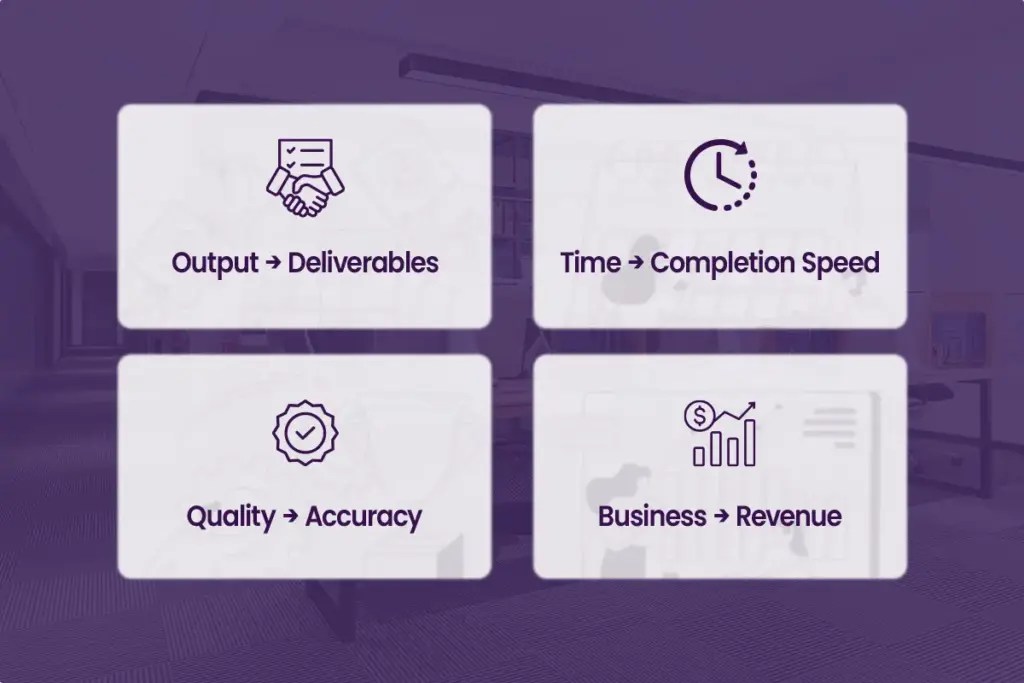
Employee productivity is measured through output, quality, completion time, and business results. A strong framework tracks how much work is completed, how well it is done, how long it takes, and what value it creates.This framework combines quantitative and qualitative metrics. Quantitative metrics track volume, speed, and revenue. Qualitative metrics track accuracy, consistency, customer satisfaction, and peer feedback. Benchmarks add context because raw numbers alone do not show whether performance is strong or weak.
Role context makes measurement more accurate. Sales teams, frontline workers, managers, and knowledge workers produce different types of output. A useful system measures performance by role, compares results against clear standards, and connects data to action.
Step 1 – Define Productivity for Each Role
Role-specific definitions make productivity measurement fair and useful. Each role has different responsibilities, goals, and expected outcomes, so one standard cannot measure every employee accurately.
Sales roles focus on revenue, conversions, and pipeline movement. Knowledge workers focus on quality, problem-solving, and project outcomes. Frontline workers focus on service speed, accuracy, and customer experience. Clear role definitions improve relevance and prevent weak comparisons.
Step 2 – Identify Key Performance Indicators (KPIs)
The right KPIs show what good performance looks like and make results easier to track over time. The right KPIs show what good performance looks better and make results easier to track over time.
Clear KPIs improve consistency and decision-making. Common examples include project completion rate, conversion rate, customer satisfaction, quality score, and response time. Useful KPIs stay measurable, role-based, and easy to review.
Step 3 – Assess Employee Output
Output shows how much work an employee completes within a set period. This measure includes tasks completed, projects finished, units produced, or deliverables submitted.
Output data helps teams track volume and throughput. High output can signal strong performance, but volume alone does not show full productivity. This measure works best when it is reviewed with quality, timeliness, and role expectations.
Step 4 – Measure Task Completion Time
Task completion time shows how quickly work moves from start to finish. This measure helps teams track turnaround time, responsiveness, and efficiency across daily tasks.
Time data adds speed to the productivity picture. Common examples include cycle time, service time, and output per hour. Faster completion supports stronger productivity when work quality stays consistent.
Step 5 – Track Output Quality and Accuracy
Quality shows whether work meets standards, while accuracy shows whether work stays free from errors. This standard protects customer experience. This reliability reduces rework and supports consistency.
Accuracy makes output more reliable. Useful quality measures include error rate, defect rate, QA score, customer feedback, and rework frequency. This step is important for knowledge work, service work, and customer-facing roles.
Step 6 – Establish Benchmarks for Productivity
Benchmarks show whether current performance is above, below, or near the expected standard. These standards help teams interpret metrics with more context.
Good benchmarks come from internal history, team averages, top performers, and industry standards. These comparisons improve consistency and make trend analysis easier. It also helps managers identify realistic targets for improvement.
Step 7 – Determine Sources of Productivity Loss
Productivity loss starts where work slows, breaks, or creates problems. This step identifies what reduces output, quality, or speed across the workflow.
Common loss points include unclear procedures, outdated tools, weak handoffs, low morale, and communication gaps. These problems create friction, delay, and disengagement. Clear diagnosis turns measurement into practical improvement.
Step 8 – Automate Data Collection and Analysis
Automation improves productivity measurement by making data faster, cleaner, and easier to track. These systems reduce manual reporting and improve visibility across teams.
Automation turns raw data into useful insight. This process uses dashboards, workflow monitoring, and analytics tools to support better decisions. These systems support real-time tracking, trend analysis, and stronger decisions. Better data collection also improves consistency across repeated reviews.
Step 9 – Create an Action Plan to Improve Productivity
An action plan turns measurement into improvement. This step connects performance data with priorities, timelines, accountability, and follow-up actions.
Managers and teams use the plan to fix weak areas and build on strong results. Benchmarks, dashboards, and review cycles help to track progress over time. A clear plan supports continuous improvement instead of one-time reporting.
How to Track and Monitor Employee Productivity Over Time
Employee productivity tracking shows how performance changes over time. Ongoing monitoring turns separate data points into clear patterns across review cycles.This process uses dashboards, benchmarks, manager reviews, and employee feedback to show whether output, quality, and workflow performance improve, decline, or stay stable. These patterns make long-term progress easier to review across weeks, months, or year-over-year periods.
Can Managers Track Employee Productivity Over Time?
Yes, managers can track employee productivity over time through review cadence, coaching, and performance trends. This process improves team visibility and helps managers compare current results with past performance. Regular reviews also show whether support, feedback, or workflow changes improve output.
Can Teams Measure Workflow Improvements Effectively?
Yes, teams can measure workflow improvements through cycle time, bottlenecks, collaboration quality, and team-level metrics. These measures show whether work moves faster, with fewer delays and less friction. Automation and streamlined workflows also make progress easier to track.
Does Comparing Input and Output Measure Productivity?
Yes, comparing input and output measures productivity at a basic level. This comparison shows how time, effort, and resources convert into results such as output per hour. This method stays incomplete when it ignores quality, accuracy, and role-specific outcomes.
Can 360-Degree Feedback Monitor Employee Productivity?
Yes, 360-degree feedback can monitor productivity from a qualitative angle. This feedback uses peer reviews, manager reviews, and self-assessments to evaluate behavior, collaboration, and work quality. This method works best when it supports performance data, not replaces it.
Does Time Management Affect Productivity?
Yes, time management affects productivity by shaping planning, prioritization, and workload distribution. Better time control improves task completion speed and reduces bottlenecks. Poor time use creates delays, rushed work, and lower consistency.
Does Profitability Indicate Employee Productivity?
Yes, profitability can indicate productivity at a business level. Revenue per employee, company revenue, and cost per output show whether workforce performance creates financial value. This signal works best with other measures because profitability also depends on pricing, demand, and business model.