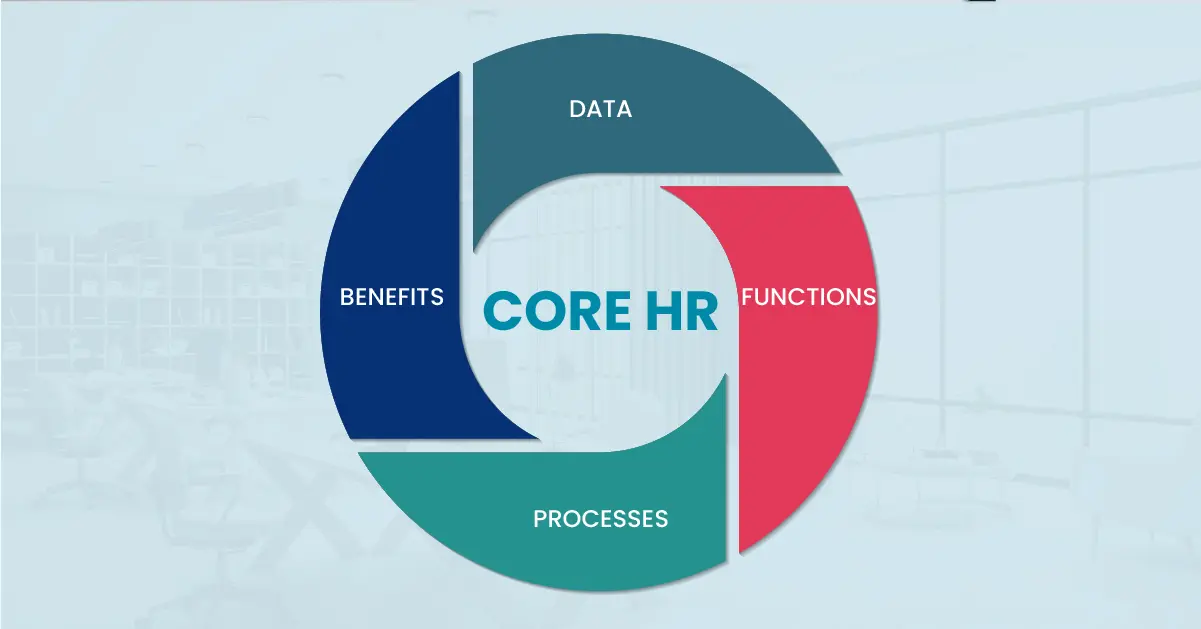
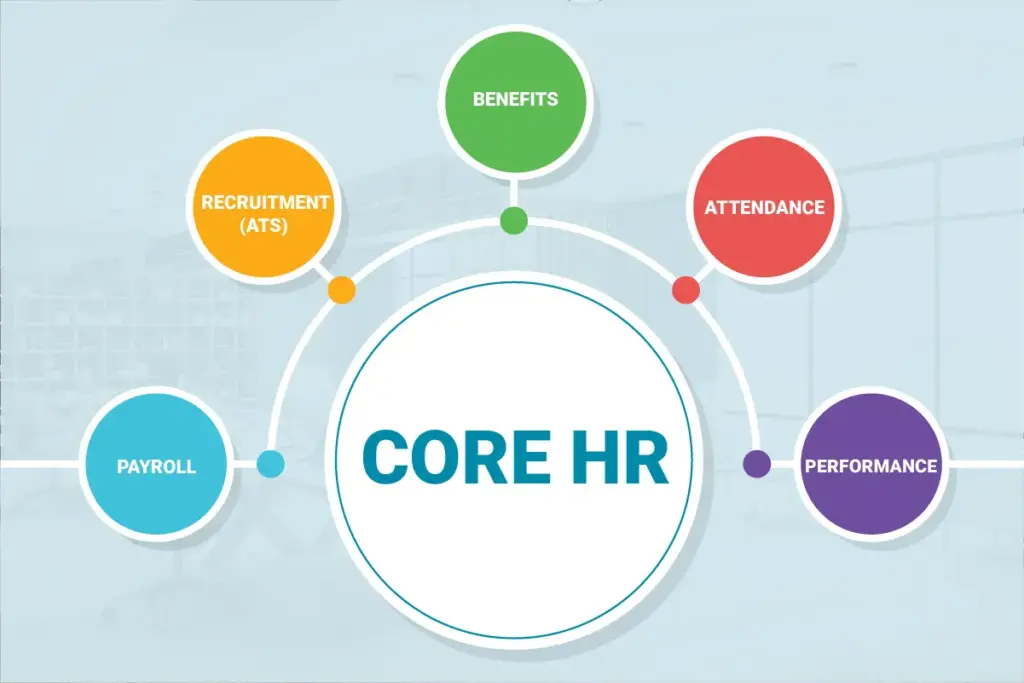
Core HR centralizes employee records and connects onboarding, payroll, attendance, benefits, and performance. Organizations maintain smooth information flow across the employee lifecycle and the employee journey. It ensures transitions such as promotions and offboarding are managed efficiently, while supporting compliance and consistent workforce operations.
Human resources manages employee data, coordinates onboarding, tracks attendance, administers benefits, and supports performance management. Processes guide structured workflows from recruitment and onboarding to payroll updates, compliance monitoring, development tracking, and offboarding. This management relies on workflow standardization, automation, KPI monitoring, and alignment with organizational goals to maintain accuracy and operational consistency.
This system enhances communication and streamlines payroll. It ensures accurate benefits administration, strengthens compliance. It also increases workforce visibility and reduces administrative
What Is Core HR?
Core HR is the backbone of Human Resources operations that keeps employee information accurate and supports the employee journey end to end. It manages employee data in a central system such as a Human Resource Information System (HRIS) or Human Capital Management (HCM) platform. It integrates with an Applicant Tracking System (ATS) to convert candidates into employee records and supports onboarding with required documents like I-9 and tax forms.
Human Resources maintains roles, reporting lines, and lifecycle changes within an organizational hierarchy framework. It tracks attendance through time and attendance systems, connects with payroll software integrations, manages benefits via benefits administration platforms, and enforces compliance with FLSA, GDPR, and EEOC regulations using secure access controls and audit trails.
Why is Core HR Important?
Core HR is important because it strengthens Human Resources management with reliable data, consistent governance, and smoother employee experiences across the employee lifecycle. It enables employee self-service for faster updates and requests.
HR staff reduce manual admin through standardized workflows. It improves internal communication by keeping one trusted employee record. Privacy and security protect sensitive HR data through role-based access. It strengthens workforce planning with accurate headcount, roles, and reporting lines. Benefits administration stays accurate through controlled eligibility and enrollment changes. Onboarding runs with clear steps and complete records. Offboarding closes access and documentation in an orderly way. HR strategy gains better execution through clean operational signals. Retention improves when employees face fewer process issues.
What are the Core HR Functions?
Core HR functions are the activities that manage employee information and keep HR operations consistent across the employee life cycle. They operate within enterprise HR software ecosystems that integrate multiple modules. These functions manage employee data, onboarding, attendance tracking, leave management, and employment law compliance. These activities are part of the broader human resources functions that guide workforce management and HR operations. They protect record accuracy and support lifecycle changes such as transfers, promotions, and offboarding within a structured talent management framework.
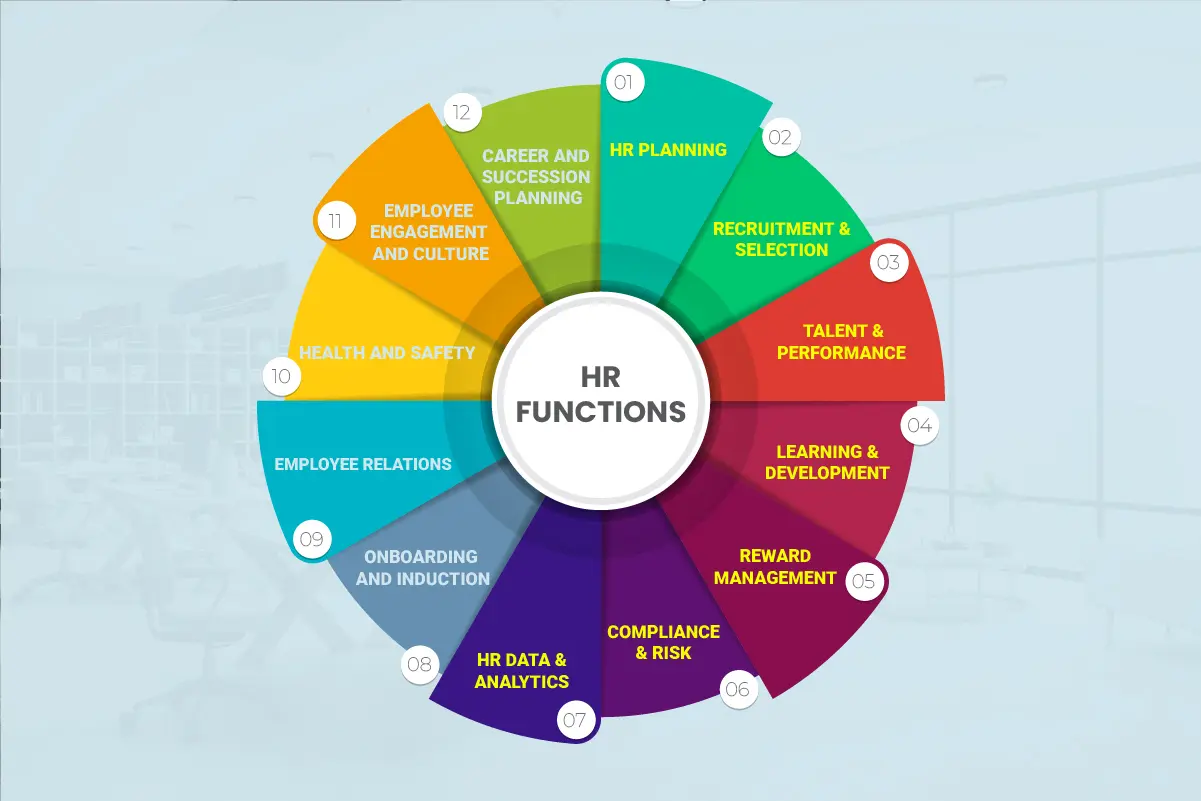
10 Key Core human resources functions are outlined below:
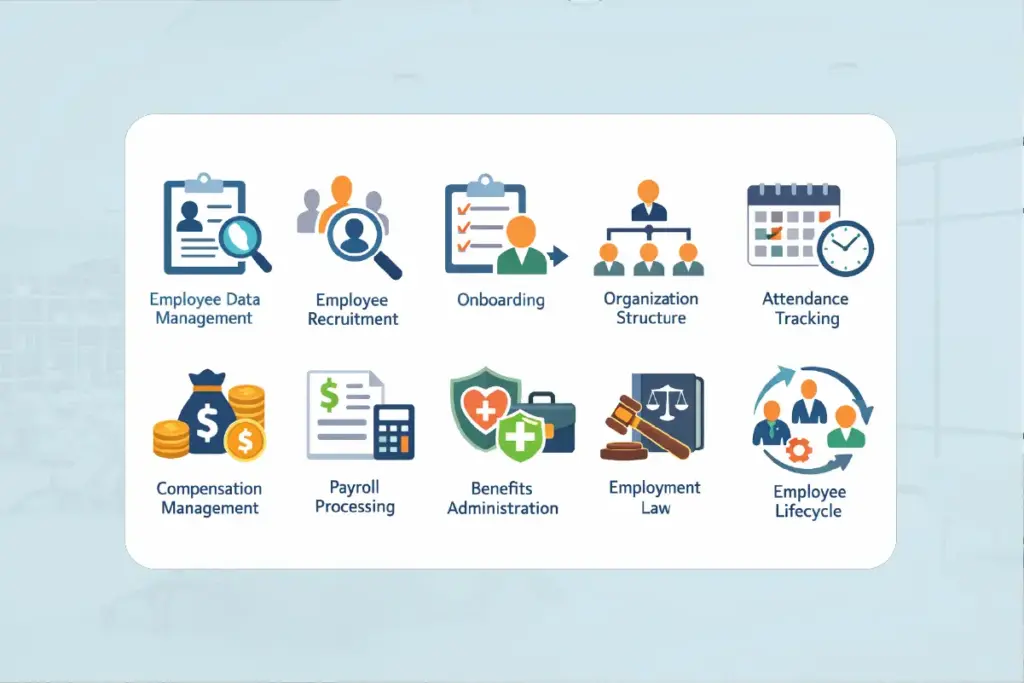
- Employee data management: Update employee profiles, job details, and employment status in one system. It updates changes quickly, maintains data quality, and supports reporting for HR management.
- Employee recruitment support: Captures hiring outcomes and converts selected candidates into employee records. It records offer terms, start dates, and job assignments. It supports a clean handoff to onboarding.
- Onboarding: Collects required documents and completes joining steps for new hires. It confirms role details, assigns managers, and records policy acknowledgements.
- Management and organization structure: Maintains departments, reporting lines, roles, and position control. It updates org changes in real time. It supports workforce planning with reliable headcount visibility.
- Attendance tracking and leave management: Tracks working time, absences, and leave balances. It routes approvals, applies leave rules, and updates records. It supports accurate payroll inputs and daily control.
- Compensation management: Manages salary components, allowances, and pay revisions. It applies effective dates, records approval history, and tracks compensation changes. It supports consistent pay decisions.
- Payroll processing support: Provides employee data and time inputs to payroll. It validates changes, syncs pay-related fields, and reduces errors. It supports accurate and timely payments.
- Benefits administration: Manages benefit eligibility, enrollment selections, and dependent details. It updates life events, tracks coverage status, and supports provider reporting. It also reduces issues for employees.
- Employment Law & HR Compliance: Supports compliance by storing policies, acknowledgements, and required documents. It applies access controls, tracks audit trails, and supports legal reporting. It also reduces risk.
- Employee lifecycle: Handles transfers, promotions, contract updates, and offboarding records. It updates status and history accurately. It also supports consistent and traceable changes.
What are the Core HR Processes?
Core HR processes are the step-by-step workflows that manage employee actions and records across the employee lifecycle and employee journey. It is mapped within Business Process Management (BPM) systems to ensure consistency and accountability.
HR completes onboarding and maintains employee records to keep job and personal data accurate. It manages compensation and benefits to keep pay correct. Offboarding keeps exit steps correct.
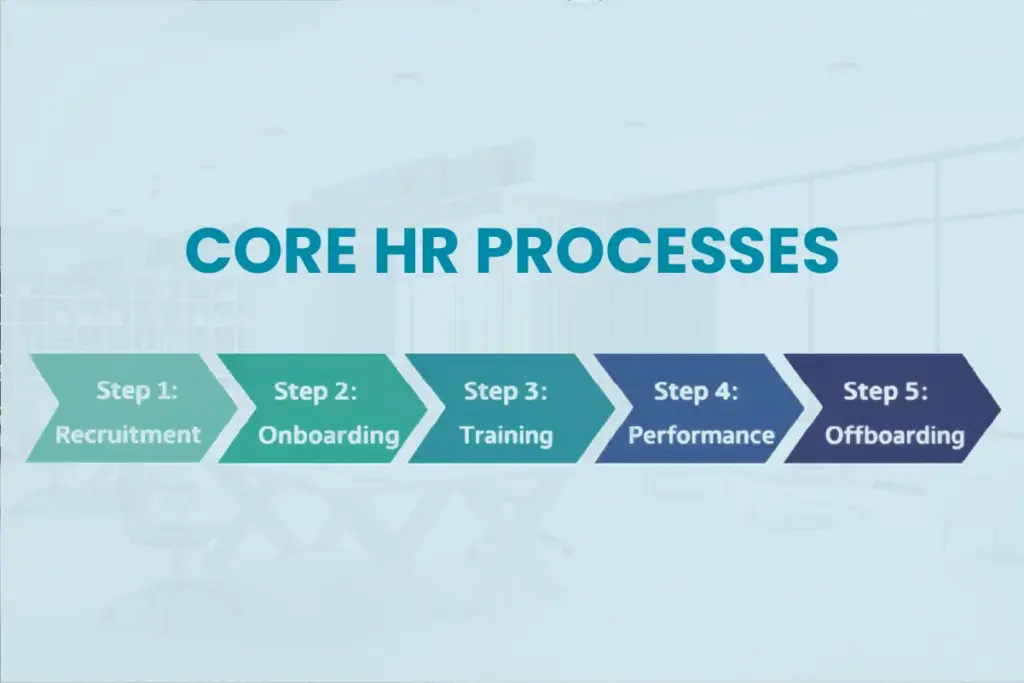
8 core HR processes are outlined below:
- Recruitment and Selection: HR sources candidates, screens applications, runs interviews, and finalizes selection. They record hiring decisions, confirm offers, and prepare accurate employee details for the next process.
- Onboarding and Orientation: HR collects documents, verifies identity, and completes joining tasks. They assign roles, set reporting lines, and deliver orientation steps that help employees start work smoothly.
- Employee Records and Data Management: HR maintains employee profiles, job history, and status changes. They update personal details, track approvals, and keep records accurate for reporting, payroll inputs, and audits.
- Training and Development: HR identifies skill needs, schedules training, and tracks completion. They record learning progress, support development plans, and help managers align growth actions with business goals.
- Performance Management: HR sets review cycles, collects goals, and records evaluations.They give document feedback, and support rating decisions. They also connect outcomes to development actions and role progression.
- Compensation and Benefits Administration: HR manages pay changes, allowances, and effective dates. They enroll employees in benefits. They also update eligibility and keep coverage details accurate during life events and job changes.
- Compliance Management: HR applies employment rules, stores required documents, and records policy acknowledgements. They control data access, track audit trails, and support legal reporting with complete documentation.
- Offboarding: HR records termination, completes clearance steps, and updates employee status. They close access, finalize exit documents, and support smooth transitions for teams.
How to Manage Core HR Processes?
To manage core HR processes are the actions HR teams use to run onboarding, payroll, performance management, and compliance. They ensure ownership, consistent steps, and reliable employee self-service portals.
Core HR management actions are listed below:
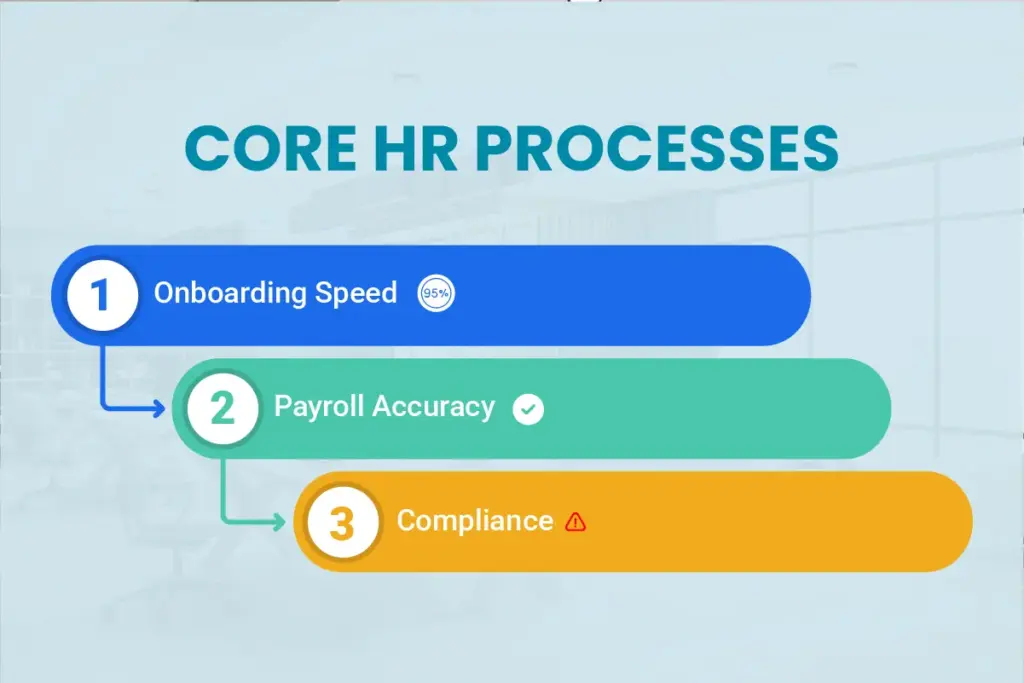
- Implement HR KPIs Dashboard: HR tracks onboarding time, payroll errors, performance management completion, and compliance gaps. They review trends weekly and fix delays fast. They use clear targets to guide action.
- Use HR Automation: HR automates approvals, reminders, and record updates for onboarding, payroll changes, and compliance tasks. They reduce manual entry and missed steps. They keep self-service portals working smoothly.
- Align HR With Business Strategy: HR connects core HR goals to hiring plans, role needs, and retention targets. They adjust processes based on business changes. They use performance management results to guide decisions.
What are the Benefits of Core HR Systems ?
Core HR system benefits are improved efficiency by making updates faster and more accurate using cloud-based HR platforms. It supports compliance by organizing documents and controlling access aligned with data governance frameworks. It also improves decisions and coordination through clear workforce data, enhanced by real-time reporting and predictive HR analytics tools.
The benefits of core HR are listed below:
- Improved employee experience: Improves employee experience by speeding requests and reducing process delays. It keeps personal and job details accurate, so employees face fewer issues during common HR tasks.
- Supports employee retention: Supports employee retention by keeping onboarding, job changes, and support requests predictable. It reduces frustration from missing updates, late actions, and unclear responsibilities across teams.
- Reduces HR admin work and process costs: Reduces HR admin work by standardizing tasks and cutting repeated data entry. It lowers process costs by preventing errors, rework, and avoidable back-and-forth.
- Data-driven decision making: Enables data-driven decision making by keeping workforce records current and structured. It supports reporting on headcount, movement, and trends for better planning and HR management.
- Enhanced internal communication: keep one shared employee record across HR and managers. It reduces mismatched information and supports faster coordination for approvals and updates.
- Improved employee self-service: Improves employee self-service by letting employees submit requests and update allowed details. It speeds routine updates, reduces HR workload, and improves response time for common needs.
- Better workforce visibility: Maintaining roles, reporting lines, and status changes in real time. It supports workforce planning with clear headcount views and accurate structure data.
Does Compliance Enable Better Workforce Decisions?
Yes, compliance enables better workforce decisions because employment law compliance keeps employee records accurate and consistent. It is kept ready for review under frameworks like SOX compliance and international labor standards. It helps leaders make safer choices in talent management such as hiring, promotions, and compensation changes while reducing legal risk exposure.
Can Data-Driven Decisions Improve Scalability?
Yes, data-driven decisions significantly improve scalability by leveraging workforce analytics, predictive modeling, and KPI tracking systems to allocate resources based on real demand and performance. It reduces risks by finding bottlenecks early and increases confidence by using clear results. It also improves customer experience by keeping service quality consistent as volume increases.
Does Core HR Enable Organizational Scalability?
Yes, Core HR enables organizational scalability by operating within scalable cloud infrastructure and SaaS HR platforms that support growing headcount without system disruption. It improves compliance by organizing required documents and limiting access through role-based access control (RBAC) frameworks.It supports performance management by keeping job history clear for reviews. It reduces repeat work by updating pay, benefits, and status changes with effective dates. It improves compliance by organizing required documents and limiting access to approved users.